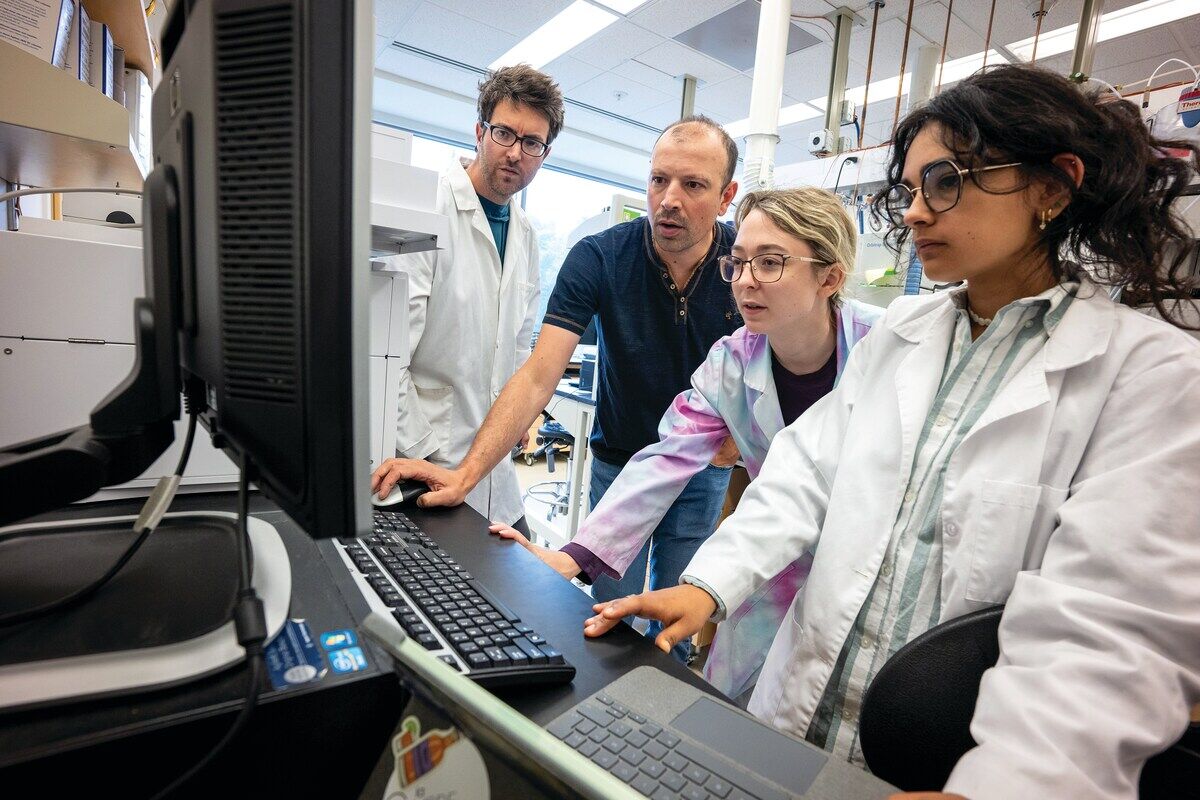

The University of Alaska system is an economic engine for the state. When students can prepare for meaningful careers close to home, they are more likely to stay here, raise families here and put their time, talent and energy back into Alaska communities. Here, UAA chemistry professor Patrick Tomco works with students.
For generations, the University of Alaska (UA) has helped shape the people and professions that keep Alaska going. Our graduates are working in nearly every part of our state, in hospitals and clinics, classrooms and businesses, nonprofits and public offices and the industries that drive Alaska's economy and way of life.
As Alaska faces workforce shortages in health care, education, public service, engineering, skilled trades and other essential sectors, keeping UA strong and accessible will be critical to how Alaska grows our own talent and strengthens our economy.
When students can prepare for meaningful careers close to home, they are more likely to stay here, raise families here and put their time, talent and energy back into Alaska communities. A 2025 University of Alaska workforce report found that among graduates since 2013, those who earned a certificate or associate degree had an 82.2% employment rate in Alaska within one year. Their average first-year wage was $56,143, rising to $76,922 by year five. Graduates with a bachelor's degree or higher earned an average of $60,311 in their first year, increasing to $80,161 by year five. By comparison, the report lists the average Alaska wage at $61,691. University of Alaska protects opportunities in Alaska by helping people move into in-demand good jobs with wages strong enough to support long-term residence in this state.
More Alaskan students in higher education means Alaskan employers can hire people who understand us and our cultures. University of Alaska graduates know the realities of life in our communities. Workers who understand both the opportunities and the challenges of Alaska's geography, economy, and way of life make our workforce stronger and our problem-solving better rooted in what Alaska communities need. For instance, programs in process technology, geomatics and the WWAMI Regional Medical Education Program directly teach students the unique realities of life in Alaska, preparing them for employment from the interior to the southeast, from southcentral to the North Slope.
As the alumni associations representing UAA, UAF and UAS, we see this impact every day through the lives and careers of our fellow graduates. We see it in the nurse serving patients in a community that needs them, the teacher helping the next generation succeed, the engineer building critical infrastructure, the small-business owner creating jobs and the public servant working to strengthen local communities. University of Alaska alumni continue to mentor students, volunteer, serve on boards, support scholarships and help open doors for those coming after them. Many retirees continue giving back through civic service, philanthropy and community leadership.
A strong, accessible University of Alaska helps students see a future here. It helps employers find the talent they need. And it helps communities grow their own leaders.
When we support the University of Alaska, we are supporting Alaska's workforce, Alaska's economy and Alaska's future.