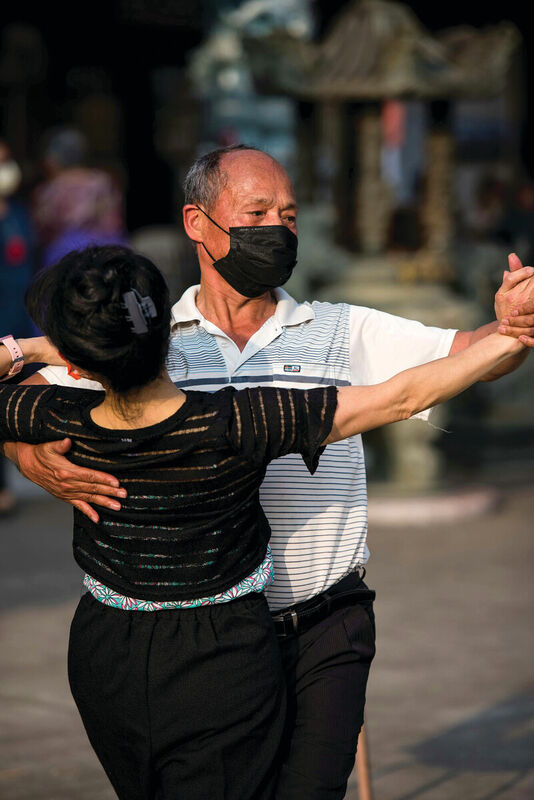

Dancing, whether it's at home or in a class or in public, is good for us. A recent study found that regular dancing improves cognitive flexibility due to the mental workout involved in learning complex moves.
Q: A client of mine, an avid salsa dancer, often talks about the physical advantages of dancing for older adults. But what about the mental benefits?
A: As we get older, the knowledge and experiences we gather inspire us to look for ways to boost not only our physical well-being, but also our mental acuity. This brings us to your interesting question about how dance can impact our brain function, alongside the already familiar physical perks.
Dancing goes beyond enjoyment; it is an expressive mix of rhythm, movement, and engaging our brains in a way that can actually sharpen our minds as we age. So, what really happens in our brains when we hit the dance floor?
What dance does for our brain
Dancing is not merely fun; it positively impacts our brain. Studies using PET scans (Positron Emission Tomography) have identified specific brain areas that activate during dance. When we dance, areas like the motor cortex, somatosensory cortex, basal ganglia, and cerebellum work together. The motor cortex helps plan and control our movements, while the somatosensory cortex aids coordination. The basal ganglia ensure our movements flow smoothly, and the cerebellum manages fine motor skills.
Listening to music also lights up brain regions involved in emotions, while learning new dance steps sharpens our memory, attention, and decision-making skills, using critical areas like the prefrontal cortex and hippocampus. Dancing is a social activity that fosters connections and enhances our emotional well-being.
How dance aids brain health
Research confirms that dancing benefits our intellectual health. A study published in Frontiers in Aging Neuroscience found that regular dancing improves cognitive flexibility due to the mental workout involved in learning complex moves. The dynamic nature of dance-requiring coordination, rhythm, balance, and spatial awareness-engages multiple brain networks, strengthening our cognitive reserves.
Active pursuits like dancing promote neuroplasticity, which is the brain's ability to create new connections. This process is supported by brain-derived neurotrophic factor (BDNF), essential for maintaining cognitive function as we age. Additionally, dancing stimulates the release of "feel-good" chemicals like dopamine, serotonin, oxytocin, and endorphins, which enhance motivation, reduce stress, and strengthen social bonds.
Neuroscientific insights into dance reveal its remarkable effects. An article in Scientific American further highlighted that syncing movements to music activates the brain's reward centers while engaging sensory and motor pathways, creating a powerful and enjoyable experience.
Dance as therapy
The advantages of dancing are so significant that it is now being included in treatments for conditions like Parkinson's disease, a neurological disorder that affects movement. A remarkable study published in the New England Journal of Medicine showed that people who dance regularly have a reduced risk of developing dementia compared to those who stick to other forms of exercise. This positions dance as a standout option for maintaining brain health as we grow older.
Comparing dance to other activities
While activities such as walking or strength training have their benefits, they often involve repetitive motions. Dancing, on the other hand, keeps our brains stimulated with fresh movements and shifts in timing, keeping our minds active and supporting overall brain health. In fact, among eleven different physical activities studied, dance was the only physical activity having a clear positive effect on cognitive function and neurological structure, enhancing connectivity across brain hemispheres and increasing gray matter volume.
In conclusion, plenty of research shows that dancing isn't just a fun way to pass the time; it is genuinely beneficial in keeping our brains healthy and our minds sharp as we age. So, whether you're into salsa, swing, ballet, tap, Zumba, or a gentle waltz, think about adding more dance to your life. It's an entertaining activity that is invigorating, but also strengthens our mental faculties, empowering us to truly enjoy our advanced years. Embrace the joy of dance as you journey toward a healthier, happier future!
As a resilience strategist Karen Casanovas guides individuals to move from shock and paralysis to stability and forward motion after a life-altering event. Her framework addresses the immediate aftermath of disruption-the moment when everything changes and people do not know what to do next. If you have questions write to her at info@karencasanovas.com.