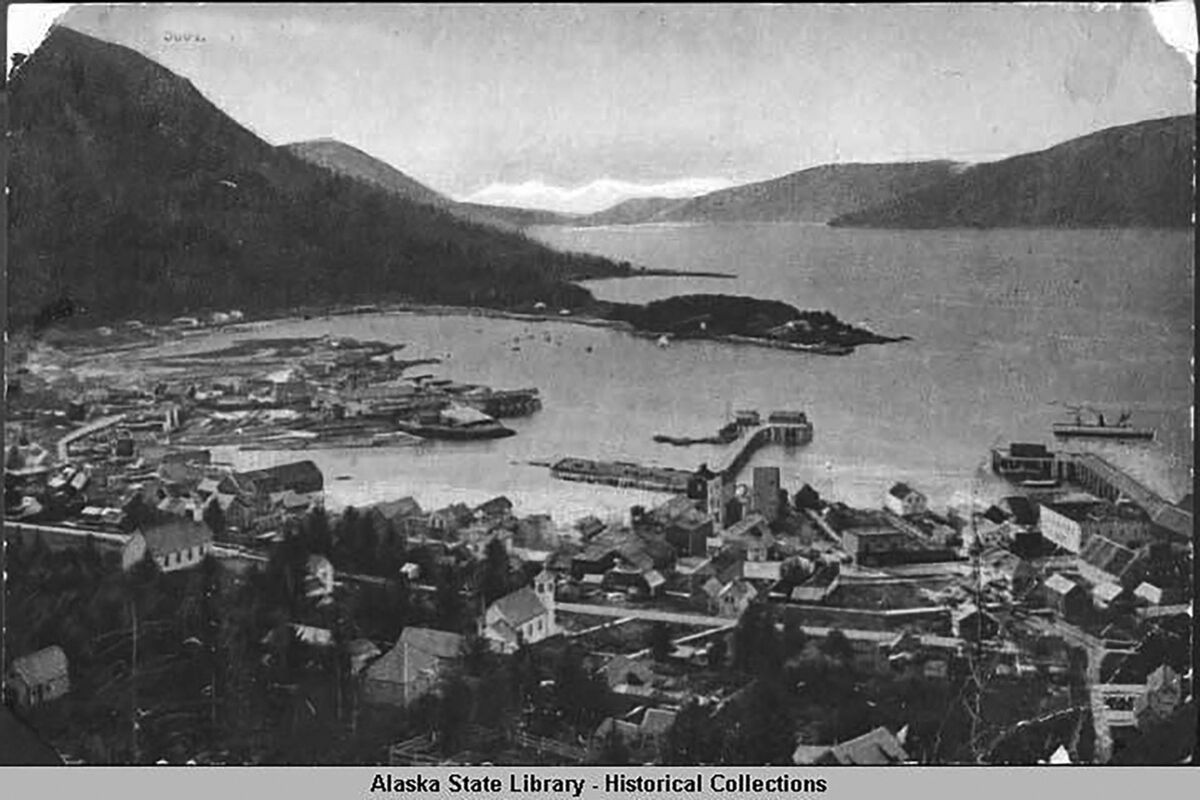

By 1897, Wrangell was a bustling town with miners on their way to find their fortunes in gold.
The Union Jack flapped briskly in the damp Southeast Alaska wind on June 2, 1840, rising for the first time over the log palisades of Fort Dionysius. With ceremony, the British flag replaced the Russian tricolor and men of the Hudson's Bay Company, clad in wool and bearing the formal letter of authority from Saint Petersburg, stepped forward. In one flourish, Wrangell entered a new chapter. Its Russian name, St. Dionysius, was replaced with Fort Wrangell, in honor of Baron Ferdinand von Wrangell, the renowned Arctic explorer. He also was chief manager of the Russian-American Company, effectively serving as the governor of Russian settlements in Alaska.
But the act was more than a change of banners. Fort Wrangell stands on land steeped in Tlingit history, where for centuries the Káa Ts'áak Héeni-People of the Thundering Water-fished, traded, and enforced their laws. The river mouth was a vital artery for trade and culture, guarded fiercely by the Naanyaa.aayí clan. As officialdom shifted, local Tlingit leaders watched, measuring the new foreign presence, acutely aware that the true authority belonged to those who understood the land and tides.
For the British, Wrangell was a strategic prize. The Hudson's Bay Company, eager for furs, tea, and profitable negotiation, swiftly established itself. The fort became a bustling center of commerce; its storehouses brimmed with otter pelts, blankets, beads, and the stories of dozens of nations. The town's harbor, once dominated by Tlingit canoes and Russian sloops, now saw bustling traffic from company ships flying the Union Jack, San Francisco whalers, and Sitka traders.
Yet, beneath this British order, the memory of Russian presence lingered. Only six years before, the Russian-American Company had arrived, constructing the first European-style fortifications-a stockade bristling with cannons and Orthodox icons. Tensions ran high in those days. Russian ambitions collided with Tlingit sovereignty, with uneasy truces and wary commerce keeping outright war at bay. The Russians persisted, conducting trade and imposing tribute, but always under the watchful gaze of Tlingit elders. The land never truly changed hands.
Before Russia and Britain, the island's soul belonged to the Tlingit. It was alive with clan memory, ceremonial poles, soaring eagles, and the rhythms of the Stikine River. Traders from the interior came for eulachon oil, ivory, and copper and paid respects or tolls to the local clans. The Tlingit controlled not only access, but narrative and cultural survival, negotiating on their own terms while adapting to each new arrival.
The flag over Wrangell would change again. By 1867, the U.S. Army-charged with enforcing new American authority after the purchase of Alaska – raised their standard. Fort Wrangell became U.S. Military Post No. 4. And after a few short decades, the small village transformed into a throbbing gold rush town. Stikine Tlingit merchants, Hudson's Bay Company traders, Russian Orthodox settlers, and American prospectors alike took their chances on these shores.
Each transition brought challenge and opportunity. Tlingit leaders found new ways to protect their people. Russian priests left behind stories and icons. The British introduced a global network of commerce and shipping. The Americans brought rail ties, boomtown law, and a steady tide of fortune-seekers. In time, Wrangell would become a hub for fishermen, loggers, and-today-visitors, drawn as much by history as by wild Alaska.
And so it is that Wrangell has the distinction of being the only Alaska town to have been under the flags of four nations. Every flag left a mark; every nation added a verse to Wrangell's enduring song. This is a town where history comes ashore, carried on the tides and carried forward in memory.
This column features stories researched for Aunt Phil's Trunk, a five-book Alaska history series written by Laurel Downing Bill and her late aunt, Phyllis Downing Carlson. Along with Bill's latest book, Pioneers From Alaska's Past, the books are available at bookstores and gift shops throughout Alaska, as well as online at www.auntphilstrunk.com and Amazon.