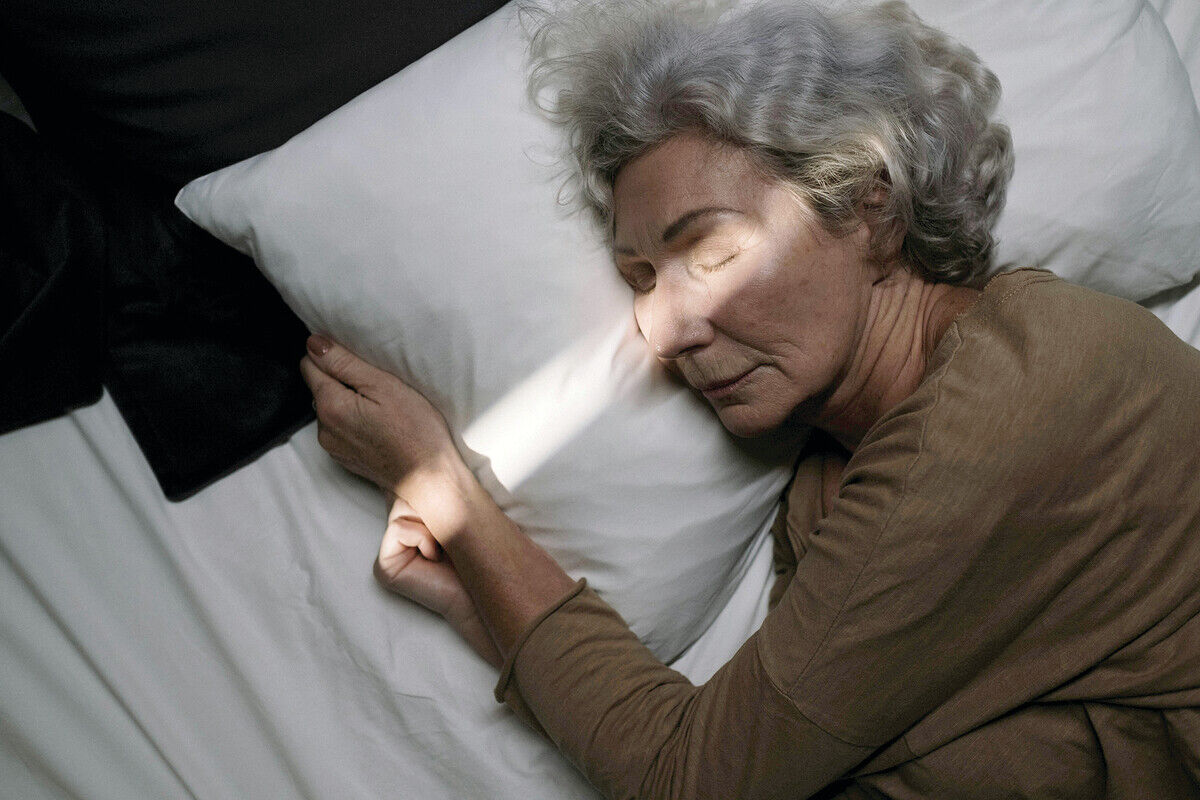

A recent survey found more than a third of women ages 45-64 report frequent nighttime waking (37%) and night sweats or hot flashes that disrupt sleep due to menopause.
Sitting in a circle holding hands and praying may have some hidden health benefits, even for non-believers. A randomized controlled trial conducted at the University of Maryland School of Medicine has found that a five-minute session of proximal intercessory prayer (PIP) significantly reduced pain and anxiety in primary care patients compared to a music control group. The PIP approach involves an in-person prayer offered by a trained volunteer. The findings, published in The Annals of Family Medicine, suggest that proximal intercessory prayer may offer a practical, non-pharmacologic complement to conventional care, particularly for underserved populations.
Researchers enrolled 180 patients from a university family medicine practice who reported clinically significant pain (having a score ≥4 on a 0–10 scale) or anxiety (as measured on the GAD-7 scale). After their medical appointments, participants were randomly assigned to receive either five minutes of Christian intercessory prayer from a trained volunteer, incorporating laying-on-of-hands, or five minutes of soft music as a control.
The researchers found that the prayer group participants reported significantly greater pain reductions immediately after the session and at the two-week follow-up compared to the music group. Prayer group participants showed significantly greater reductions in anxiety scores immediately after their treatment. This effect persisted at two and six weeks suggesting durable effects lasting at least a month and a half.
No participants reported adverse events and 97 % of prayer recipients were neutral, agreeable, or strongly agreeable to having PIP available as part of future medical visits. Prayer is the most common form of complementary medicine in the United States, used by 43% of Americans with 62% of this group identifying as Christian. Despite this widespread use, rigorous clinical trials of
in-person intercessory prayer have been scarce. This study is among the first well-powered randomized controlled trials of proximal intercessory prayer conducted in a standard primary care setting.
"Proximal intercessory prayer was safe, effective, and well-received as complementary treatment for pain and anxiety," said lead author Dr. Katherine Jacobson, an assistant professor of family and community medicine at the University of Maryland School of Medicine, Baltimore. "It may be a low-cost, non-pharmacologic, effective adjunct to standard care with particular relevance for underserved populations."
Co-author Joshua W. Brown, who is a professor of psychological and brain sciences at Indiana University and director and co-founder of the Global Medical Research Institute, said the prayer intervention was effective regardless of the patient's faith or no faith. "Our findings add to research showing how prayer changes brain function in ways that promote health."
Women face challenges to getting quality sleep across key life stages
A new survey by the American Academy of Sleep Medicine (AASM) has found that more than a third of women ages 45-64 report frequent nighttime waking (37%) and night sweats or hot flashes that disrupt sleep (35%) due to menopause. Further, more than a quarter of women between 45 and 64 have increased daytime fatigue (29%) and trouble falling asleep (27%). Only 6% of women in this age group say their sleep quality has not changed during menopause.
"Too many women accept poor sleep as an inevitable part of menstruation or menopause when effective treatments are available," said Dr. Suzie Bertisch, chair of the AASM's Women's Sleep health Task Force. "If hormonal changes are disrupting your sleep, talk to a healthcare professional. It's an important first step toward getting the sleep you need and protecting your long-term health."
The academy commissioned an online survey of 2,007 adults in the United States. Fieldwork took place between June 5-13, 2025, by Atomik Research, an independent market research agency.
The AASM recommends that adults sleep seven hours or more a night on a regular basis to promote optimal health. However, studies show that about 30% of women fail to get sufficient sleep on a regular basis. Some sleep disorders, such as chronic insomnia and restless legs syndrome, are more common in women, and sleep problems can be related to both cyclic hormonal changes and significant shifts in hormone production that occur across the lifespan.
Through its women's sleep health initiative, the AASM is working to advance education, research, and advocacy to ensure women's unique sleep needs are addressed in clinical practice. For women looking to improve their sleep, AASM sleep experts recommend keeping a consistent sleep schedule. They recommend going to bed when you feel sleepy at night and aim to wake up at the same time each day, including weekends.
Cooling your sleeping space may be beneficial. Keeping your bedroom comfortably cool and the use of moisture-wicking sheets may help alleviate discomfort from night sweats. Regular physical activity can improve sleep quality and may help ease some hormonal symptoms that disrupt sleep, like mood changes and fatigue. However, it is recommended that individuals should avoid vigorous workouts right before bedtime.
Eating a balanced diet is helpful. Choosing balanced, regular meals throughout the day can help to support steady energy levels and consistent body rhythms. Sleep experts say it is important to limit caffeine and alcohol. Both can disrupt sleep cycles, especially when consumed later in the afternoon or evening.
It is recommended that individuals reduce screen time at night. The blue light from phones, tablets or TVs can interfere with the brain's ability to prepare for sleep. It may be best if you turn off electronics 30 to 60 minutes before bed and give yourself time to wind down.
John Schieszer is an award-winning national journalist and radio and podcast broadcaster of The Medical Minute. He can be reached at medicalminutes@gmail.com.
John Schieszer is an award-winning national journalist and radio and podcast broadcaster of The Medical Minute.