

Sorted by date Results 126 - 150 of 165
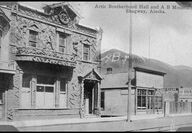
What Alaska connection do England's King Edward VII, Al Capone's chief legal counsel, Albert Fink, and American presidents Warren G. Harding, Theodore Roosevelt and William McKinley have in common? They are all honorary members of the Arctic Brotherhood club. This fraternal club, which at its height boasted around 10,000 members in the early 1900s, was the brainchild of sea captain William Connell, a hospitable man who had a reputation for keeping company with his passengers aboard the steamer,...
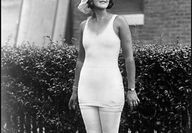
Dubbed The Arctic Venus by newspapers across the globe, Helmar Liederman turned many heads as she strutted her stuff in 1922 during the Inter-City Beauty Contest – forerunner of the Miss America Pageant. The 23-year-old beauty, who immigrated from Sweden in 1921, proved to be one of the most popular contestants of the 57 that entered the Atlantic City event. Only 10 girls had competed in the inaugural contest the previous year. "A real beauty from the north country, Miss Helmar Liederman of June...

Many have heard tales touting the shenanigans of conmen like Jefferson "Soapy" Smith and a man named Hendrickson, better known as the "Blue Parka Bandit." But neither of them caused the demise of an Alaska governor's political aspirations. That dubious honor falls upon H.D. "Harry" Reynolds, who singlehandedly brought down Gov. John Brady in 1906, according to a 1984 article written by Alaska historian Stephen Haycox for the Anchorage Daily Times. Brady came to Alaska in 1878 as a protégé of m...

Theories about how and when Alaska became inhabited with people ebb and flow like the state's rivers. Archeologists pretty much agree that Alaska's mainland was physically and ecologically a part of Asia 10,000 years ago, and that the Bering Strait was a grassy land area that separated the Bering Sea to the south and the Chukchi Sea to the north. While the picture of who crossed the land bridge and when is still murky, the strongest hypothesis leans toward people crossing over from Asia in waves...
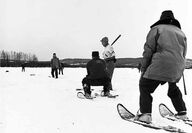
As the days get longer and winter begins to wane, it's safe to assume that the boys of summer are preparing for another awesome season of baseball – a mainstay in Alaska for generations. Before Anchorage had plotted out its main street on Fourth Avenue in 1915, baseball teams faced off near the mud flats to put bats to balls that Fourth of July. Following statehood in 1959, Alaska attracted a multitude of collegiate players who played for teams like the Anchorage Bucs, Alaska Glacier Pilots, Pen...
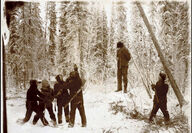
An abundance of gamblers, con men and thieves made their way north following the discovery of gold in the Klondike in the late 1890s. And with no official lawmen to take care of evildoers, miners took the law into their own hands and dispensed frontier justice. Murder was punished by hanging; stealing meant a sound whipping or banishment. After Alaska became a territory in 1912, Alaskans turned away from hanging and whipping offenders but kept their tradition of banishment to deal with...

The second-largest earthquake in recorded history struck at 5:36 p.m. Anchorage time. Measuring 8.4 on the Richter scale, experts later upgraded it to 9.2 on the Mw (moment magnitude) scale as the Richter scale was determined to be inaccurate at measuring earthquakes above 8.0. Many Alaskans later said they lived through hell on earth during those 4 minutes and 38 seconds of violent shaking and the tsunamis that followed. The temblor's epicenter was located about 75 miles southeast of...
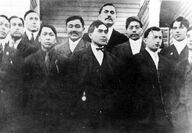
After decades of oppression by Russian fur traders, and then American interests, the Natives of Southeast Alaska decided it was time to organize into a united voice to change the way people perceived them and to better their circumstances in a land that their ancestors had inhabited for thousands of years. A dozen men and one woman from Sheldon Jackson Training School (later known as Sheldon Jackson College) met in 1912 and wrote a charter for what became known as the Alaska Native Brotherhood....
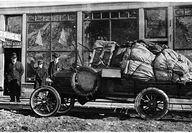
One of Alaska's early pioneers, who died 33 years ago this month at age 99, left his mark on early Alaska transportation. Robert E. "Bobby" Sheldon built the territory's first automobile, drove the first car down the Richardson and opened the first auto stage line. Born in 1883 in Snohomish, Wash., Sheldon and his father arrived in Skagway along with thousands of others in search of golden riches. The pair postponed their plans when they learned the Canadian government required each person...
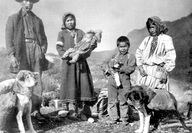
Sled dogs have a long and illustrious history in the North Country, from the early days of Native settlements to the gold-rush booms during the 1890-1900s. Natives of Alaska, northern Canada, Greenland and Siberia used dogs as winter draft animals for centuries. Russians arriving in western Alaska during the early 1800s found Alaska Natives using dogs to haul sleds loaded with fish, game, wood and other items. The Natives ran ahead of the dogs as they guided them on the yearly trips between...
Before the Internet and cell service became synonymous with instant communication, Alaska's remote villages relied on a military network of telephone-telegraph radiophone stations to relay messages. Only a few cables reached a few Alaska cities back in the mid-1900s, so messages from these Alaska Communication System stations were transmitted to and from radiophone stations scattered all over the territory. With no roads and no other forms of communication, these radiophones were the lifeline...
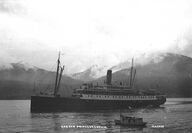
One of the last ships scheduled to leave Southeast Alaska in the fall of 1918 met with disaster only a few days into her voyage. On October 23, Canadian Pacific Railway steamship Princess Sophia pulled out of the port at Skagway around 10 p.m. and headed into the Lynn Canal bound for Vancouver. The 245-foot Scottish-built ship was filled with 350 Klondikers, families and others heading south for the winter. The steamship company, in an effort to hold more passengers for the voyage, had...
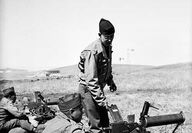
Many of those who came to Alaska during World War II liked what they saw and decided to set down roots in the Last Frontier. Among them was a true visionary who created one of Anchorage's premier recreational facilities, organized the Alaska Territorial Guard and built the first subdivision in the town once known as "Ship Creek." Born in Tyler, Washington, in 1890, Marvin "Muktuk" Marston found himself mining copper and gold from the bush country of Northern Ontario and Quebec in the late...
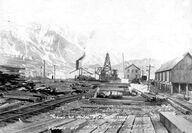
Prospectors searching for gold in the Wrangell Mountains during the early 1900s found a mountain of copper instead. Others had discovered coal and oil in the Prince William Sound and Bering River regions. Only transportation – a railroad – was needed to bring copper, coal and oil together to unlock the riches of Midas. Five separate railroads were started from three different points on the coast. Then the fight was on – gun battles, political battles, court battles, fantastic right...
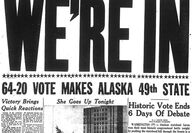
At 2 p.m. on June 30, 1958, teletypes and telephones all across Alaska began buzzing with exciting news. After six days of debate, the U.S. Senate had voted 64-20 to add Alaska as the 49th state. The House of Representatives already had approved its admission by a vote of 210-166 on May 28. The long battle for statehood was over. Sirens blared in towns across the territory. Crowds celebrated in the streets. Alaskans had won their 91-year struggle for self-government. Following the...
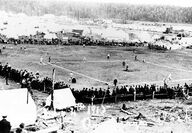
The infant town of Anchorage, only a few years old, had always been interested in America's favorite pastime when William F. Mulcahy, later known as "Mr. Baseball," blew into the lusty, young railroad town in 1922. Everyone turned out to watch the games played evenings after supper and weekends. As far back as 1916, Anchorage had a regulation baseball diamond, built by the Bridge Engineers, located in what was known as Recreation Park in the railroad yards north of Ship Creek. A press box, with...
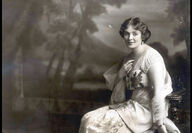
Although the frenzied gold seekers of the North lacked most of the luxuries, not to mention necessities, of civilized living, they did have theaters – even opera houses. There had been entertainment in California's gold rush of 1849, but never had there been such garish and colorful entertainers as in the days of '98. And many of them went on to fame and fortune. Sid Grauman, later owner of Hollywood's Grauman's Chinese Theatre and high priest of Hollywood's cinematic palaces, started his career...
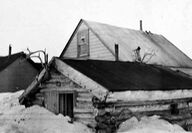
Called the Spanish flu, only because the Spanish press wrote about it, a virus took more than 500,000 American lives between 1918-1919 (estimates worldwide range from 20 to 100 million). And it came north, even though Territorial Gov. Thomas Riggs did everything in his power to keep it away from Alaska's shores. When 75 citizens of Seattle died from the flu during the week of October 12, Riggs asked steamship companies to examine all passengers heading north on the final ships of the season and...
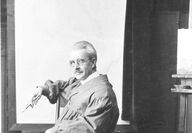
Among the memorials in the Anchorage Municipal Park Cemetery stands a small, pink marker adorned with a palette. It is the final resting place of Sydney Mortimer Laurence, one of Alaska's greatest artists. Known for his dramatic landscape paintings, Laurence was one of the first professionally trained artists to live in the territory. His works, which often feature Mt. McKinley, hang in the Musee du Louvre in Paris, the National Art Gallery in Washington, D.C. and many other locations worldwide....
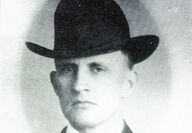
One of Anchorage's most respected doctors made a mercy run to Iditarod four years before Nome's celebrated diphtheria serum run of 1925. Early on the morning of Jan. 24, 1921, Dr. John B. Beeson hopped on a train leaving Anchorage and headed toward Iditarod after getting word through the U.S. Army Signal Corps that Claude Baker was near death. Baker, a well-known Iditarod banker, was suffering from an old injury he'd received while serving as a guard on the gold trail outside the famous mining...
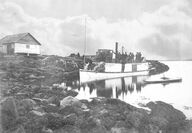
Some courageous pioneers saw the possibilities of the Yukon Basin years before the Klondike Gold Rush. And a few stand out above the rest, including Leroy Napoleon "Jack" McQuesten, Alfred Mayo and Arthur Harper. Had they not seen the need to establish supply centers, it is possible that gold rushes to the Yukon and Alaska would not have boomed during the late 1890s. These men met up in British Columbia in 1873 and continued on to Fort Yukon together. The first winter, Harper went prospecting...
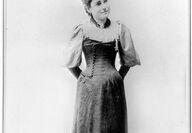
Mollie Walsh made a name for herself among the prospectors who flooded north during the Klondike Gold Rush. Her "grub tent" was a welcome sight to many miners who climbed the White Pass Trail in the late 1890s. One man carried such affection for her that he created a memorial that still stands today in the little town of Skagway. Born Mary Walsh in 1872, the Irish lass had packed her bags and headed north from Montana in 1897. Various sources say she was a dancehall girl in Butte, worked for an...
When Alaska was transferred from Russia rule to the United States, it was up to the Americans to establish a way to deliver mail across its new possession. The Russians had not used a postal system. Communications between Russia and Russian America was handled by dispatch cases transported by Russian supply ships. Russian residents sent and received both business and personal mail through the Russian commanders in their communities. Three months before Alaska was formally handed off to American rule, the first post office in the northern...
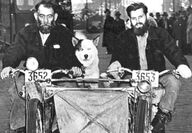
While workers completed the last portion of the Alaska-Canada Highway at Beaver Creek on Oct. 25, 1942, the idea to connect Alaska to the rest of the world was born many years earlier. Donald MacDonald, a locating engineer with the Alaska Road Commission, had dreamed for years of an overland coastal route to Alaska. It would run north from Seattle across British Columbia through the Yukon Territory to Fairbanks. MacDonald and a group of Fairbanks residents formed the International Highway...
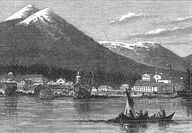
Russian fur traders wanted to build a fort called Mikhailovsk about six miles north of the present town of Sitka in 1799. They gave the Tlingits, who'd occupied that part of Southeast Alaska for more than 10,000 years, beads and other trading goods in exchange for a small piece of land. The Native people at first thought the Russians might be good trading partners. But soon they realized they'd made a bad deal with Alexander Baranof, chief manager for the Russian-American Company. Submission to...